 English
If you typed china p3.91 led video wall screen manufacturers into Google at midnight because a client wants a quote tomorrow and you have no idea whether US$400 per square metre is a steal or a trap — welcome, you are not alone. This is exactly the search that lands you on a page full of factory photos that look suspiciously identical, certifications that may belong to someone else, and prices that differ by three times for what appears to be the same screen. The truth is, the hard part isn't finding a supplier. It's figuring out which one will still answer your email six months from now when a power supply dies.
P3.91 means the pixel pitch is 3.91 mm. That gives you about 65,536 pixels per square metre. It's the workhorse pitch of the event world because it sits right at the point where price drops sharply but the image still holds up at normal viewing distances.
Rough numbers worth keeping in your head:
Best viewing distance: from about 4 metres out. Closer than 3 m and you'll start noticing the pixel structure.
Resolution reality check: a 4 m × 3 m wall gives you roughly 1,024 × 768 pixels. That's not Full HD. If your client insists on 1080p native, the wall needs to be closer to 7.5 m × 4.2 m. Size follows resolution, not the other way around.
Indoor brightness: 600–1,200 nits is usually plenty. Outdoor needs 4,500–6,000 nits and IP65 sealing.
The mistake I see most often: people fixate on the pitch and forget the resolution math, then wonder why their keynote slides look soft. Pitch is a spec. Resolution is the experience.
This is where the whole search goes sideways. Type "China P3.91 LED video wall manufacturers" and you'll get hundreds of results. A large share of them are trading companies, agents, or showrooms that buy from a factory and add a margin. That's not automatically bad — some of them are genuinely helpful — but you need to know which one you're talking to, because it changes the price, the lead time, and who fixes things when they break.
| Who they are | How to spot them | Price level | What changes for you |
|---|---|---|---|
| Real OEM factory | Owns SMT line, aging room, can tweak cabinet moulds and driver ICs | Lowest | Best price, slower replies, time-zone friction, small orders get low priority |
| Trading company / agent | Broad product catalogue, fast quotes, vague about production details | Medium-high | Fast communication, but technical answers come second-hand |
| Big brand with local distributor | Rebrands OEM hardware, adds software, calibration, local stock | Highest | Someone actually picks up the phone locally; you pay for that |
| Hybrid — factory + overseas office | Guangdong plant plus a sales desk in your region | Medium | Often the sweet spot for first-time buyers |
A trick I use: ask for a live video call and have them walk to the production floor with today's date written on a piece of paper next to the SMT machine. If the camera suddenly "can't connect" or "the line is under maintenance," file that away. Also ask for the cabinet mould number and search it. If the exact same cabinet shows up under four different brand names, you're looking at a shared OEM design — totally normal, by the way — which means price and support become the real differentiators, so negotiate accordingly.
Quotations look identical until you line them up row by row. This is the list I actually compare.
| Spec | What I ask for | Why |
|---|---|---|
| LED lamp brand | Nationstar / Kinglight gold wire, black face SMD | Black face boosts contrast under stage lights; gold wire survives humidity better |
| Driver IC | MBI5153, ICN2053 or equivalent | Cheap ICs cause ghosting and smear on camera |
| Refresh rate | ≥3,840 Hz if you're filming it | Lower rates throw scan lines into your video feed |
| Brightness | 600–1,200 nits indoor; 5,000+ outdoor | Over-bright indoor screens look harsh and burn power |
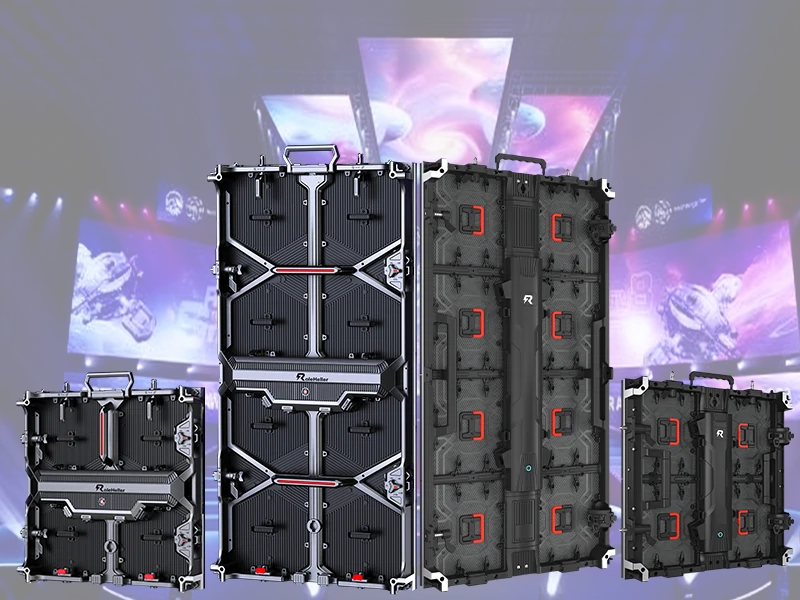
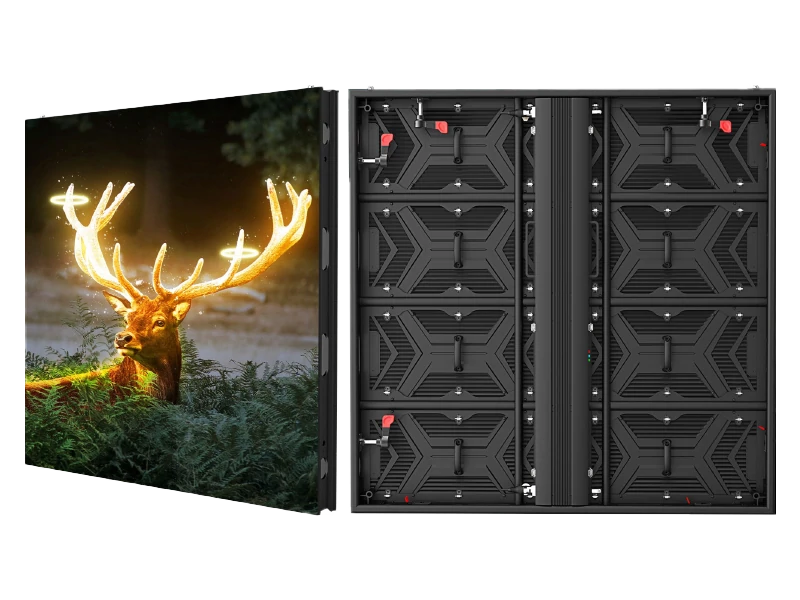
| Cabinet | Die-cast aluminium, 500×1,000 mm or 500×500 mm | The 500×1,000 size plays nicely with 16:9 content |
| Weight | ~7–12 kg per cabinet for rental type | Matters when your crew is rigging at 2 a.m. |
| IP rating | IP43 indoor fine; IP65 only if outdoors or near open doors | Don't pay IP65 premium for an air-conditioned ballroom |
| Power supply | Mean Well or recognised brand, correct voltage for your country | Wrong voltage config is a surprisingly common shipping error |
| Warranty | 2–3 years, written exclusions | Modules and PSU usually covered; labour and freight often aren't |
| Spares | 3–5% spare modules + spare PSUs and receiving cards | One dead module turns a whole wall patchy |
One more that people skip: power draw. A P3.91 wall pulls roughly 250–600 W per square metre at peak depending on configuration. Ask for the average consumption figure, not just the maximum, because maximum basically never happens with normal content. Your venue's electrical capacity is the thing that derails installs, not the screen itself.
These are ballpark levels I've seen quoted recently for P3.91, FOB China, screen body only. Installation, structure, shipping, controller and import duties sit on top.
Budget tier: around US$200–400/sqm. Generic lamps, basic cabinet, minimal QC. Fine for a back-of-house display, risky for a main stage.
Mid tier: roughly US$400–700/sqm. Decent LEDs, good IC, 3-year warranty, better colour consistency. This is where most sensible buyers land.
Premium / branded: US$700–1,400+/sqm. You're paying for calibration reports, engineering support and a local person who shows up.
Then add: controller/sending card, flight cases if it's rental gear, structure or truss, rigging labour, shipping and duty. A common rule of thumb is that the all-in installed cost ends up somewhere between 1.4× and 2× the bare screen price. If a quote looks like it's missing half the project, it probably is — ask explicitly what's excluded.
And a note on payment terms: 30–50% deposit with balance before shipment or against the bill of lading copy is standard. Anyone asking for 100% upfront gets crossed off my list.
Ask for the company's business licence and check the registered name against the bank account name. They should match. If the money is going to a different entity than the one on the contract, pause.
Request the cabinet mould number and LED batch info, then cross-check.
Get recent aging-test photos — a wall running for 72 hours straight, dated.
Ask for two reference projects installed in the last 18 months, ideally in your region, and actually contact them.
Confirm the Incoterm. FOB Shenzhen is common; if they quote EXW, your freight forwarder handles everything from the factory gate and costs jump.
Lock the spec into the contract: LED brand, IC model, brightness, refresh rate, warranty scope, spare parts list, delivery date, and a late-delivery clause.
Agree dead-pixel acceptance criteria before shipment. Industry norms allow a small number per square metre. If you need zero, say so and expect to pay.
Plan the site early: power phases, rigging points, access hours, whether the crates fit in the service lift.
Honestly, step six is the one everyone skips. They sign a proforma that says "P3.91 LED video wall 20 sqm" and nothing else. Then they get exactly what that sentence means.
Production on a standard P3.91 order typically runs 15–25 working days after deposit and drawing approval. Then sea freight to Europe or the US West Coast is roughly 3–5 weeks, air freight a few days but much pricier. Add customs clearance and installation. Realistically, plan eight to fourteen weeks from signed PO to go-live. If someone promises you ten days, they're either pulling stock off a shelf somewhere or telling you what you want to hear.
Also: flight cases. If this is rental gear that moves, budget for proper cases from day one. Skipping cases to save money is the fastest way to turn a three-year asset into an eighteen-month one.
Do I really need P3.91 or should I go cheaper?
If the audience is mostly beyond 6–8 metres and the content is video loops and graphics, P4.81 saves real money and looks fine. If there's text, logos, or people standing close, stick with P3.91. The money you save on the cheaper pitch usually gets spent on regret.
Rental cabinets or fixed install?
Rental cabinets are heavier per square metre and cost more, but they survive being moved, stacked and toured. Fixed cabinets are lighter and cheaper. Permanent lobby wall? Fixed. Events company or church that tours? Rental type, no question.
Can I install it with my own crew?
Structurally, yes, if they've done LED walls before. But calibration and colour matching across cabinets isn't something you pick up from a YouTube video. At minimum, have the supplier's engineer handle commissioning, even if you pay a day rate.
What kills these screens?
Three things, mostly. Power supplies fail first — they're the cheapest component and they work the hardest. Impact damage during handling. And water, always water: from cleaning, from a leaking air-con unit, from an open loading dock door during a storm. Never spray cleaner directly on the screen.
Is virtual production / XR use possible with P3.91?
For XR you generally want tighter pitch and very high refresh, so P3.91 is more of a background or stage element than a camera-close surface. It can work at distance, but confirm refresh rate, low-latency processing and moiré behaviour with actual camera tests before committing.
If I were spending my own money on a P3.91 wall sourced from China today, I'd go mid-tier factory — one that can prove it has a real production line — and I'd spend the difference on better LEDs, spare parts, and proper content. I wouldn't chase the absolute cheapest quote, and I wouldn't pay top dollar for a big international brand unless local support and stocked spares mattered more than the price gap, which for a mission-critical install, sometimes they do.
The hardware itself is pretty commoditised now. What you're really buying is the person who answers the phone at 6 p.m. on a Friday when half the screen goes dark before load-in. Everything else is negotiable.
Also, I'd rather buy a smaller wall done properly than a massive one done cheaply. A clean, well-calibrated 12-square-metre screen beats a patchy 30-square-metre one every time, and audiences remember whether it looked sharp, not the exact dimensions.
1. What is the best viewing distance for a P3.91 LED video wall?
From about 4 metres onwards. Closer than 3 metres the pixel grid becomes noticeable. For close-up viewing, consider P2.6 or finer.
2. Is P3.91 suitable for outdoor use?
Only with IP65-rated front-sealed cabinets, higher brightness (5,000+ nits) and a structure rated for wind load. Standard indoor P3.91 cabinets are typically IP43 and will not survive outdoors.
3. How much does a P3.91 LED video wall from China cost?
Bare screen typically US$200–1,400 per square metre depending on tier, with most buyers landing in the US$400–700 range. All-in installed cost often runs 1.4× to 2× the bare screen price.
4. How do I know if a supplier is a real factory?
Ask for a live video tour of the production line with a dated note visible, request the cabinet mould number and cross-check it, ask for recent aging-test photos, and speak to a recent reference client.
5. What is the typical lead time?
Production takes 15–25 working days after deposit and drawing approval. With shipping, customs and installation, plan eight to fourteen weeks total.
6. What warranty terms should I insist on?
At least 2–3 years covering modules and power supplies, a written list of exclusions, and clarity on who pays return freight. Also secure 3–5% spare modules plus spare power supplies and receiving cards on site.
7. Does P3.91 work for broadcast and filming?
Yes, if you specify 3,840 Hz or higher refresh and a quality driver IC. Lower refresh rates produce visible scan lines on camera.
8. Can a P3.91 wall display Full HD or 4K?
Only if the physical size provides enough pixels. Full HD native requires roughly 7.5 m × 4.2 m; true 4K would need around 15 m × 8.4 m. Smaller walls scale the signal, which is fine but not native resolution.
9. What should I check about power and electrical setup?
Confirm voltage configuration at order (110 V vs 220 V), verify the venue's available capacity against average — not peak — consumption, and plan for proper distribution and cooling behind the wall.
10. What maintenance does a P3.91 wall need?
Keep the environment cool and dry, never spray liquid on the screen, run a brightness schedule to prevent uneven aging, test spare modules quarterly, and keep firmware and calibration files backed up.
.jpg "Who Are the Best China Conference LED Video Wall Manufacturers?")
.jpg "China COB LED Video Wall Manufacturers | Find Verified Suppliers")